
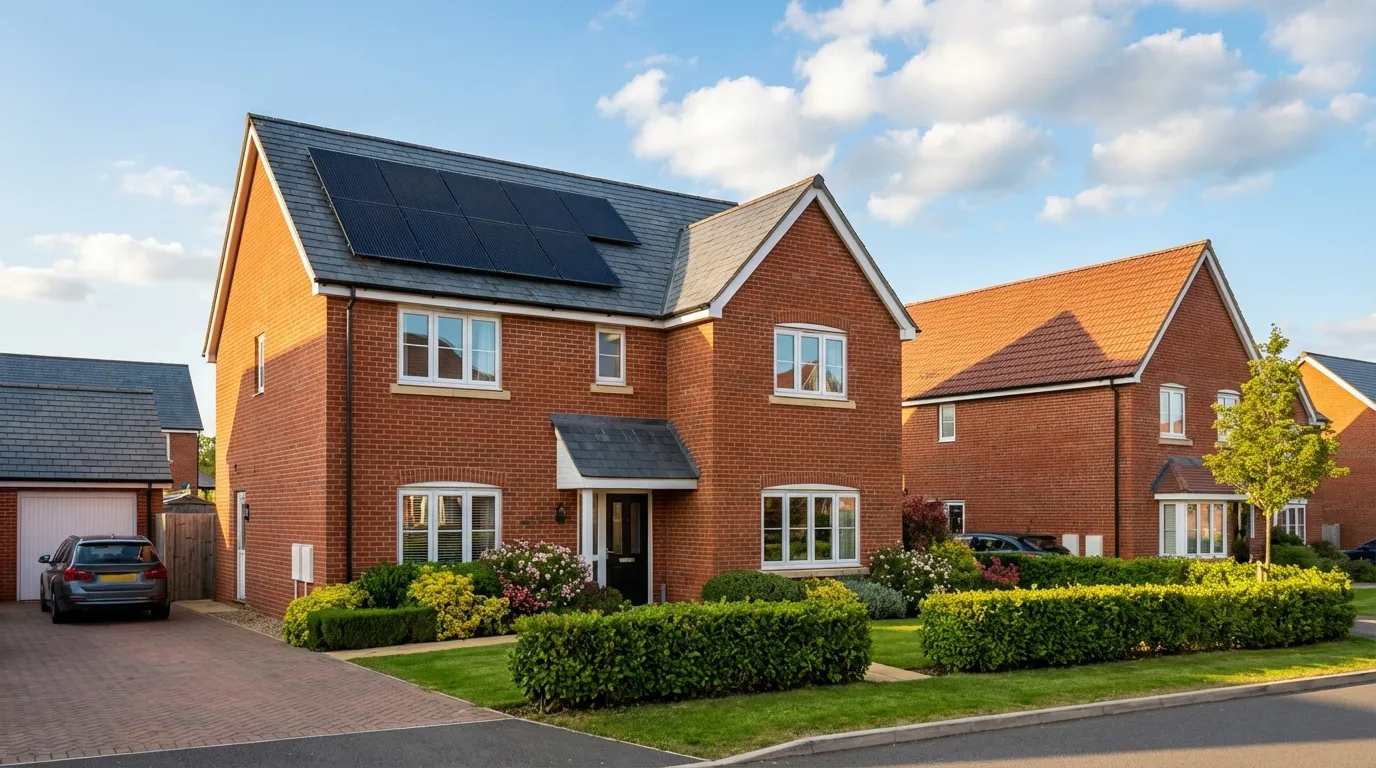
Thinking about installing solar panels at home? You're not alone. More UK households are turning to solar energy to cut electricity bills, reduce carbon emissions, and take control of their energy.
This guide answers the key questions—cost, savings, how solar panels work, and whether your home is suitable.
What are at home solar panels?
At home solar panels are systems installed on your roof that generate electricity from sunlight.
A typical solar panel system includes:
- Solar panels
- An inverter (converts electricity into usable alternating current)
- Optional solar battery for storage
- Sunlight hits the panels
- Electricity is generated
- Your home uses this power first
- Any surplus electricity is exported or stored in a battery
- Roof size
- Number of panels
- Roof direction (south-facing performs best, north facing roof less so)
- Shading from nearby trees
- Your energy usage
- Available roof space
- System size you want
- Smaller homes: 6–10 panels
- Average homes: 10–16 panels
- Larger homes: 16+ panels
- System size
- Roof complexity
- Installation requirements
- Whether you add battery storage
- Solar panel systems: £5,000–£10,000+
- Solar battery: £2,000–£6,000+
- Using your own electricity instead of buying from an energy supplier
- Avoiding rising energy costs
- Selling surplus electricity
- You earn money for excess energy
- You improve overall system value
- You make better use of solar generation
- Extra energy is exported
- Store energy during the day
- Use it in the evening
- Reduce grid reliance
- Roof direction (south, east, or west is ideal)
- Minimal shading from nearby trees
- Enough roof space
- Good roof condition
- You live in a conservation area
- Your property has restrictions
- Panels would significantly alter the roof
- Install scaffolding for access
- Fit mounting system to roof
- Install solar panels
- Connect inverter and wiring
- Set up monitoring system
- Save around one tonne of carbon per year
- Lower your overall carbon footprint
- Reduce reliance on fossil fuels
- Electricity bills
- Exposure to rising energy costs
- Dependence on the grid
- Occasional cleaning
- Basic system checks
- Monitoring performance via apps
- Heat pumps
- Battery systems
- Other renewable technologies
- Sunlight levels
- Roof angle and direction
- Shading
- System design
- Lower energy bills
- Greater control over electricity
- Reduced carbon emissions
- Long-term savings
- Estimate how much electricity your system could generate
- See your potential cost savings
- Choose the right solar panel system and battery
They allow you to produce electricity for your household appliances using renewable energy instead of relying fully on the grid.
How do solar panels work at home?
Solar panels work by converting sunlight into electricity.
Here's the simple flow:
Even without direct sun, panels still generate energy using daylight.
How much electricity can solar panels generate?
This depends on:
For a typical household, solar panels can generate a large portion of daily electricity needs, especially during peak hours.
How many solar panels do you need?
The number of panels depends on:
As a rough guide:
A solar expert will size your system based on how much electricity you want to generate.
How much do at home solar panels cost?
Solar panels cost varies based on:
Typical costs in the UK:
The initial cost can feel high, but long-term savings often outweigh it.
How much can you save on energy bills?
Solar panels can significantly reduce electricity bills.
Savings come from:
The average saving depends on system size and usage, but many households see strong reductions over time.
Can you sell electricity back to the grid?
Yes. Through the Smart Export Guarantee (SEG), you can sell surplus electricity.
This means:
Export tariffs vary depending on your energy supplier.
Should you get a solar battery?
A solar battery stores excess energy for later use.
Without a battery:
With a battery:
Battery storage helps you use more of your own electricity and increase savings.
Is your home suitable for solar panels?
Most homes are suitable, but key factors include:
Even properties with less ideal angles can still benefit from solar technology.
Do you need planning permission?
In most cases, installing solar panels falls under permitted development.
You may need approval from your local planning office if:
It's always worth checking before installation.
What is the installation process?
A standard solar installation usually takes 1–2 days.
Steps include:
Optional extras like bird proofing can be added to protect the system.
How much carbon do solar panels save?
Solar panels reduce carbon dioxide emissions by replacing grid electricity.
A typical system can:
This makes solar one of the most effective renewable technologies for homes.
How do solar panels affect your energy bills?
Solar panels reduce:
You'll still have a standing charge from your energy supplier, but your usage costs can drop significantly.
What maintenance do solar panels need?
Solar panels are low maintenance.
Most systems last 25+ years with minimal upkeep.
Can solar panels work with other technologies?
Yes. Solar works well alongside:
Combining systems can improve overall energy efficiency and savings.
What affects system performance?
Solar panel performance depends on:
Peak efficiency is usually during midday in summer, but panels still produce energy year-round.
Are solar panels worth it?
For many UK homeowners, solar panels are a strong investment.
You get:
While there is an upfront cost, the long-term benefits make solar a practical choice.
Start your solar journey
If you're thinking about installing solar panels at home, the next step is understanding your potential savings.
At CRG Direct, we help you:
Use our solar calculator to get started and see what solar could do for your home.