
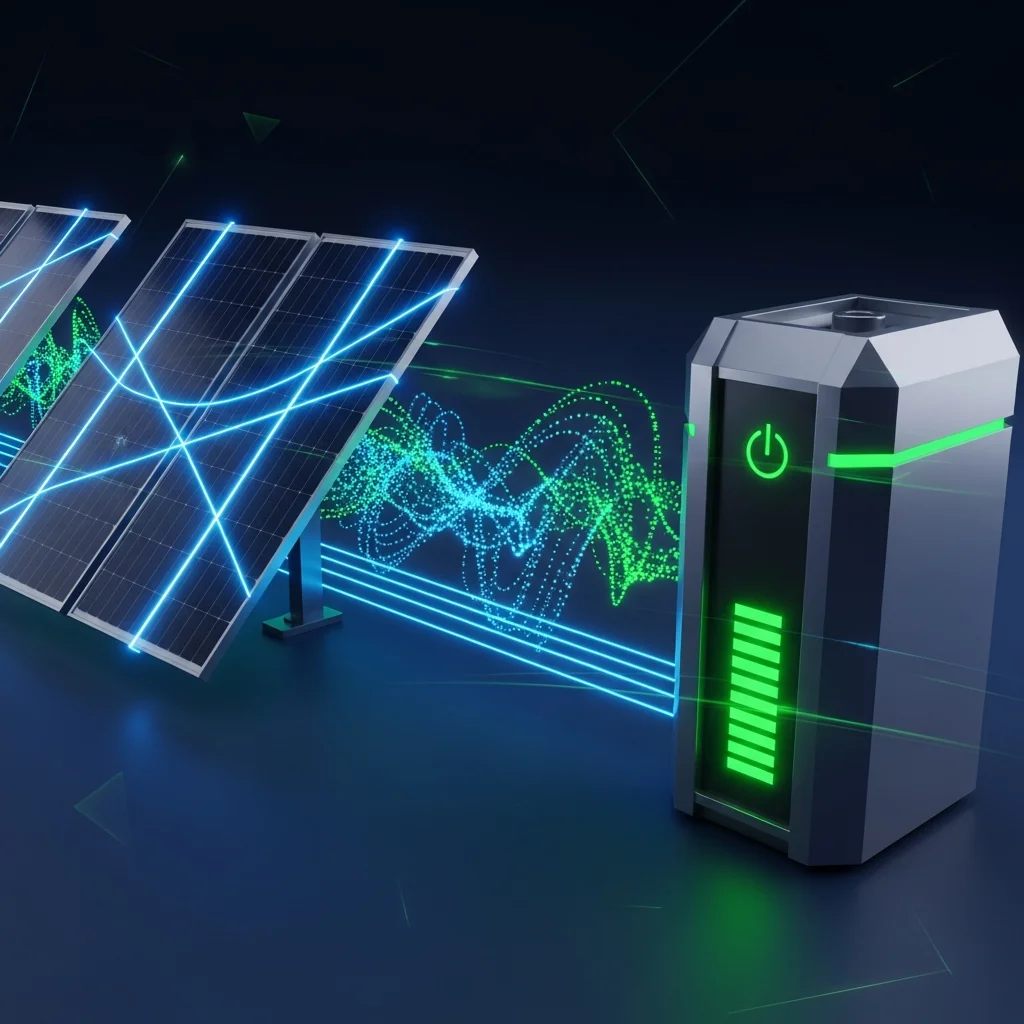
Solar Battery Energy Independence in the UK: A CRG Direct Guide
Energy bills in the UK have lurched upward repeatedly over the past four years, and most households have no real mechanism to defend themselves against the next spike. This guide explains how combining solar panels with battery storage changes that, and how CRG Direct designs and installs systems across the South and South East of England that let households and businesses generate, store, and manage their own clean power.
Why energy independence matters for your bills
The UK imports a significant share of its gas from international markets, which means domestic energy prices track global events that most households have no control over. The price cap introduced by Ofgem has softened the worst peaks, but it hasn't removed the underlying volatility. Bills that were around £1,100 a year for an average household in 2019 rose to over £2,500 in 2022-23 before partial relief set in.
That volatility runs in both directions, but the structural trend is upward. The UK's ageing gas infrastructure, continued reliance on fossil fuels for heating and power, and geopolitical pressure on supply routes all mean that households planning their finances around a stable bill are taking on hidden risk.
Energy independence means generating enough of your own electricity, and storing enough of it, to reduce how much of your consumption comes from the grid. You don't need to go entirely off-grid to benefit. A household that covers 60-70% of its annual electricity from rooftop solar and battery storage has effectively insulated itself from a large part of future price increases, though the exact share depends on your usage, generation and energy costs.
About CRG Direct
CRG Direct is an MCS-certified, NICEIC-approved renewable energy installer based in Hampshire. Since 2017, we've designed and installed solar, battery storage, heat pump, and energy efficiency systems for homeowners and businesses across Portsmouth, Southampton, Winchester, Basingstoke, Surrey, West Sussex, and the wider South East.
Core services:
- Solar PV design and installation (domestic and commercial)
- Battery storage systems and hybrid inverter setups
- Heat pump installation (air source and hybrid)
- Loft insulation and energy efficiency measures
- Energy surveys and system design
- Air conditioning and ventilation systems
- Maintenance and aftercare
CRG Direct offers free, no-obligation site surveys with bespoke system design for every project. Every survey covers roof or site assessment, shading analysis, energy consumption review, and a written specification with a full cost breakdown.
Finance options include 0% interest plans for qualifying customers, Power Purchase Agreements (PPAs), and leasing arrangements for commercial clients. We work with both residential households and business customers, with separate commercial teams for larger-scale projects.
How solar panels and battery storage work together
A solar panel system on its own generates electricity when the sun shines. Without storage, any electricity your panels produce that you don't use immediately is exported to the grid, sold back at a modest rate under the Smart Export Guarantee, typically 1p to around 20p per kWh. Meanwhile, you buy electricity back from the grid in the evenings at 24-28p per kWh. The maths strongly favours using your own generation rather than exporting it.
Battery storage fixes this mismatch. During the day, your panels charge the battery with surplus electricity. In the evening, your home draws from the battery instead of the grid. The result is that a household that might self-consume 20-30% of its solar output without a battery can self-consume over 70% with one.
During grid outages, some battery systems provide automatic backup power. If your inverter supports islanding mode, the system disconnects from the grid and continues supplying your home from the battery, then resumes normal grid-connected operation when supply returns. Not all systems include this feature, so confirm with your installer if backup is a requirement.
The combined effect of solar generation and battery storage on monthly bills is significant. Households that generate and store enough to cover their evening and morning usage can cut their grid electricity purchases by more than half, and in some cases eliminate them almost entirely during summer months.
Battery storage options and sizing for UK homes
Battery chemistries
Most residential battery storage systems sold in the UK today use lithium iron phosphate (LFP) chemistry. LFP batteries are thermally stable, safe for indoor installation, and cycle well over their warranty period. Some systems use NMC (nickel manganese cobalt) chemistry, which offers higher energy density at similar cost but runs slightly hotter. For home installation, LFP is the more common and generally preferred option.
Sizing by daily energy consumption
The right battery capacity depends on how much electricity your household uses after the sun goes down. A rough guide:
| Daily evening/night usage | Recommended battery capacity |
| 5-8 kWh | 5-6 kWh battery |
| 8-12 kWh | 9-10 kWh battery |
| 12-18 kWh | 13-15 kWh battery |
Sample recommendations for typical UK households:
- 1-2 bed flat or small terrace, low usage: 5-6 kWh battery. Covers evening consumption and morning kettle-and-shower loads.
- 3-4 bed family home, average usage: 9-10 kWh battery. Covers most evening and overnight loads through summer and shoulders most winter evenings.
- Large home or household with an EV: 13-15 kWh battery, or two batteries in parallel. Handles overnight EV top-up alongside household use.
For a fuller walk-through, see our guide on how to choose the right size solar battery.
Warranty and lifespan
Quality home battery systems carry a 10-year warranty at 70-80% capacity retention. In practice, LFP systems often run 10-15 years before capacity degrades to a point where replacement becomes worthwhile. At £3,000-£6,000 for a mid-range capacity system, including inverter and installation costs, the cost per kWh stored over the battery's life compares favourably with buying grid electricity at current prices.
Designing an efficient home energy system
Start with a home energy survey. Before specifying equipment, a proper survey establishes your baseline: annual consumption, when you use electricity, what your roof can support, and whether other changes (insulation, a heat pump, an EV charger) should be integrated into the design. CRG Direct's free surveys cover all of this.
Size the PV array against your household's real usage. Oversizing panels relative to your battery and consumption can mean you export a large share of generation at low SEG rates. Undersizing means your battery charges slowly and runs dry most evenings. A well-designed system balances generation, storage, and consumption so that self-consumption is maximised year-round, not just in June.
Smart energy management systems connect your solar, battery, grid connection, and high-consumption appliances (EV charger, heat pump, immersion heater) into a single controller. Systems such as myenergi, GivEnergy, or Solis hybrid inverters with monitoring platforms let you set rules: charge the battery from solar first, top up from cheap overnight grid tariffs if needed, divert surplus solar to the hot water cylinder before exporting. This kind of control can meaningfully lift self-consumption above what a basic solar-plus-battery setup achieves.
A typical battery system sits in the loft or utility room and measures roughly 100cm x 60cm x 25cm. Most modern units mount on a wall bracket and require no special ventilation for LFP chemistry. Your installer will confirm placement and cable routing during the survey.
Integrating solar with a heat pump
Air source heat pumps (ASHPs) are increasingly common in UK homes as gas boiler alternatives, and they pair well with solar panels, battery storage, and EV charging when the integration is planned properly.
A heat pump draws 2-4 kW of electricity to deliver 6-12 kW of heating output. If that electricity comes from your solar panels rather than the grid, the effective cost of heating drops sharply. The challenge is timing. Peak solar generation around midday doesn't align naturally with peak heating demand in the early morning and evening.
Practical integration approaches:
- Use a smart heat pump controller or home energy management system to run heating cycles during solar peak hours, warming the thermal mass of the house or a hot water cylinder ahead of the evening
- Set the battery to prioritise heating loads before exporting surplus to the grid
- Schedule heat pump defrost cycles and hot water top-ups for the middle of the day when generation is highest
Monitoring your heat pump's energy consumption via its own reporting app (or CT clamp sensors in your energy management system) lets you see exactly how much solar is offsetting your heating costs month by month. CRG Direct installs and commissions heat pump and solar systems together and can specify the right controls to make the integration work without manual scheduling.
Costs, financing, and payback
Typical upfront costs in 2026:
| System | Typical installed cost |
| 4kWp solar only | £6,100 - £8,500 |
| 4kWp solar + 9.5 kWh battery | £10,000 - £14,000 |
| 6kWp solar + 13 kWh battery | £14,000 - £18,000 |
| Commercial solar + battery (50-100kWp) | £40,000 - £120,000+ |
CRG Direct financing options:
- 0% interest finance: for qualifying residential customers, spreads the cost over 1-3 years without interest
- Personal loan: useful for longer terms. The monthly repayment often roughly offsets electricity bill savings, making the net monthly outlay close to neutral
- Power Purchase Agreement (PPA): typically available for commercial installations. CRG Direct or a finance partner installs and owns the system, and the business buys the generated electricity at a fixed rate below current grid prices
- Leasing: commercial clients lease the equipment over an agreed term, and CRG Direct handles maintenance
Calculating simple payback
Take your total installed cost and divide it by your annual financial benefit (electricity savings plus SEG income). For a household spending £7,500 on a solar-only system and saving around £490 a year in bills and SEG, simple payback is just over 15 years. Add a battery at £4,500 extra and raise annual savings to around £850 through higher self-consumption, and payback on the combined system runs to around 14 years. The combined system can pay back faster than solar alone despite the higher upfront cost, because the battery captures savings that would otherwise be lost to cheap exports.
All of these figures depend on your usage, generation and energy costs, and they improve as electricity prices rise. Households with high usage and well-optimised self-consumption typically recover installation costs within a decade.
Planning, compliance, and the Future Homes Standard
Planning permission
Most domestic rooftop solar installations in England and Wales qualify as permitted development and require no planning permission. Exceptions apply to listed buildings, properties in conservation areas, and installations that protrude more than 0.2 metres above the roof plane. Ground-mounted systems and systems on flat roofs may also require consent depending on size. Check with your local planning authority if you're uncertain, or ask CRG Direct, as the survey process covers this.
DNO notification and MCS compliance
Any system with an inverter AC output above 3.68kW requires a G99 notification to your Distribution Network Operator before connection. For smaller systems, a G98 notification is required but is typically simpler and faster. CRG Direct handles all DNO paperwork as part of the installation process.
MCS certification is mandatory for installations that will use the Smart Export Guarantee or apply for government grants. CRG Direct's MCS status means every installation we complete carries MCS documentation.
The Future Homes Standard
The Future Homes Standard, currently targeting implementation by 2028, will require new-build homes in England to be built to near-zero carbon performance, with solar panels effectively mandatory. A large and growing share of new-build homes already come with solar panels installed. For households in existing homes, the Standard signals that solar and heat pump technology is the direction of UK housing policy. Retrofitting now, ahead of regulatory pressure, locks in current prices and current incentive rates.
Maximise savings with tariffs, time-of-use, and export
Time-of-use tariffs
Energy suppliers including Octopus Energy (Agile and Flux tariffs), British Gas, and others offer time-of-use electricity tariffs that charge different rates at different times of day. Overnight rates can fall to 7-15p per kWh compared to 24-28p during peak hours. A battery-equipped household can charge the battery cheaply overnight from the grid during the lowest-rate window and avoid buying expensive peak electricity entirely.
In summer, your battery may charge fully from solar before midday and have no need to draw from the overnight cheap rate at all. In winter, when solar generation is lower, the overnight cheap rate tops up what solar couldn't. Smart hybrid inverter systems handle this automatically when programmed correctly.
Smart Export Guarantee
The SEG pays households for every kWh of surplus electricity exported to the grid. Rates range from 1p to around 20p per kWh depending on supplier and tariff type, with some variable tariffs paying more during high-demand periods if you can export at the right time. A typical system earns roughly £100-£360 a year from SEG, with around £220 a year common for a 4kW system on a competitive fixed tariff. Your actual income depends on your generation, usage and the tariff you secure.
To qualify for SEG, your system must be MCS-certified and you must have a smart meter. Register with your energy supplier once installation is complete. For more detail, see our guide to the Smart Export Guarantee.
Battery charge timing
Set your battery to charge from solar during the day, top up from the grid during the cheapest overnight window only if needed, and hold charge for your peak-usage hours. Most smart inverter systems let you programme this on a daily schedule or automate it based on weather forecasts and real-time tariff data.
Commercial-scale energy systems and ESG benefits
Commercial solar and battery installations follow the same principles as domestic systems but at larger scale, with different financial structures and regulatory requirements.
Typical commercial system options:
- Rooftop commercial solar (20-250kWp): office buildings, warehouses, retail units, and agricultural properties with large roof areas. Often paired with batteries sized to cover peak demand periods or shift load away from high-tariff windows.
- Ground-mounted commercial arrays: for businesses with available land. Often the most cost-effective per kWp installed.
- Battery-only installations: some commercial sites with high grid import costs and variable demand profiles benefit from battery storage without solar, using the battery to avoid peak demand charges.
ESG benefits
Scope 2 greenhouse gas emissions (purchased electricity) are a material line on most ESG reports. Installing solar significantly reduces a business's Scope 2 figure. Battery storage and smart energy management further reduce grid import, lowering the carbon intensity of operations. For businesses with net-zero commitments or reporting obligations under the UK Streamlined Energy and Carbon Reporting (SECR) framework, on-site generation is a tangible and verifiable reduction.
Decentralised generation also reduces strain on the national grid, contributing to grid resilience, a benefit increasingly valued by investors and regulators reviewing a company's sustainability posture.
Commercial financing
CRG Direct's commercial team offers bespoke finance, including Power Purchase Agreements and leasing structures that allow businesses to access clean energy systems without large capital expenditure. Under a PPA, a business pays for the electricity generated by the system rather than the system itself, with rates fixed below prevailing grid prices for the contract term. Contact CRG Direct's commercial team for a scoping conversation and indicative pricing.
Installation, maintenance, and safety
CRG Direct installation stages
- Free site survey and system design: roof or site assessment, shading analysis, consumption review, written specification
- Quote and proposal: itemised cost breakdown, equipment specification, finance options
- DNO notification: CRG Direct files G98 or G99 as required and manages the response
- Scaffolding: erected the day before or the morning of installation
- Panel and mounting installation: rails, panels, and weatherproofing completed
- Battery and inverter installation: typically in the loft, garage, or utility room
- Electrical commissioning: wiring to the consumer unit, generation meter installation, system testing
- MCS certification: documentation issued, which you use to register for SEG and grants
- Monitoring setup: inverter app or energy management platform configured
Maintenance checks
- Annual visual inspection: look for loose panel connections, debris accumulation, and physical damage to panels or mounting rails. CRG Direct offers annual service checks for £100-£200.
- Panel cleaning: most panels clean adequately in rainfall. In high-pollution or high-bird-activity areas, clean every 1-2 years with a soft brush and clean water.
- Inverter monitoring: check the inverter's monitoring app monthly. A sustained unexplained drop in output signals a fault worth investigating.
- Battery health: most modern battery management systems report capacity and cycle count through an app. Check annually and compare against the warranty degradation curve.
Safety certifications to verify
Before appointing any installer, confirm:
- MCS certification (Microgeneration Certification Scheme), mandatory for SEG eligibility and government grants. Check at mcscertified.com.
- NICEIC or NAPIT approval, electrical competency scheme membership. CRG Direct holds NICEIC approval.
- HIES or RECC membership, consumer protection schemes that provide dispute resolution if something goes wrong.
Case studies: savings and backup power
Homeowner savings example, Southampton, four-bed detached
A family of four in Southampton with high electricity usage (7,800 kWh a year) installed a 5kWp solar system and a 9.5kWh battery in spring 2024. Pre-install bill: £1,850 a year. Post-install, the household self-consumes roughly 70% of solar output, covering around 3,200 kWh of annual usage. Electricity bill: approximately £650 a year. SEG income: £140 a year. Annual saving: £1,340. Installed cost: £12,400. Simple payback: around 9.3 years. Figures vary depending on usage, generation and energy costs.
Commercial example, retail warehouse, Hampshire
A warehouse with 450 square metres of south-facing roof installed a 60kWp solar array and 50kWh battery in late 2023 under a Power Purchase Agreement. The business pays 9p/kWh for generated electricity versus its previous 27p grid rate. The system covers around 65% of the site's daytime consumption. First-year electricity cost saving: around £28,000, with zero capital expenditure under the PPA structure. The system also reduced the site's SECR-reported Scope 2 emissions by 43%.
Backup power outcome, rural Hampshire household
A rural property that suffered three grid outages lasting over four hours each in 2022-23 installed a solar and battery system with an islanding-capable inverter. During a subsequent storm-related outage, the system automatically isolated from the grid and continued powering the property for 11 hours from stored energy alone. The family kept heating, lighting, refrigeration, and internet running throughout, with no appliance or food loss.
How to get started with CRG Direct
The first step is a free site survey. CRG Direct's engineers visit your property, assess your roof or site, review 12 months of energy bills, and produce a written system specification with full costs. There's no obligation to proceed and no sales pressure.
The quote process covers equipment specification, projected savings calculations, available finance options, and a timeline for installation including any DNO application periods. Most residential installs take 4-8 weeks from survey to completion, longer if a G99 DNO application is required.
CRG Direct is MCS-certified and NICEIC-approved. Every installation comes with full MCS documentation for SEG registration and any applicable grants.
Book a free site survey:
- Online: crgdirect.co.uk/quote
- Phone: +44 330 133 2497
- Email: info@crgdirect.co.uk
Sources
- Ofgem, Smart Export Guarantee (SEG): official scheme page
- Ofgem, Energy Company Obligation (ECO4): official scheme page
- HMRC, 0% VAT on energy-saving materials (zero rate to 31 March 2027): official guidance
- MCS Certified Installer Register: mcscertified.com
- Urban Big Data Centre, University of Glasgow, solar panel property price research: ubdc.ac.uk
- Future Homes Standard, UK Government: gov.uk