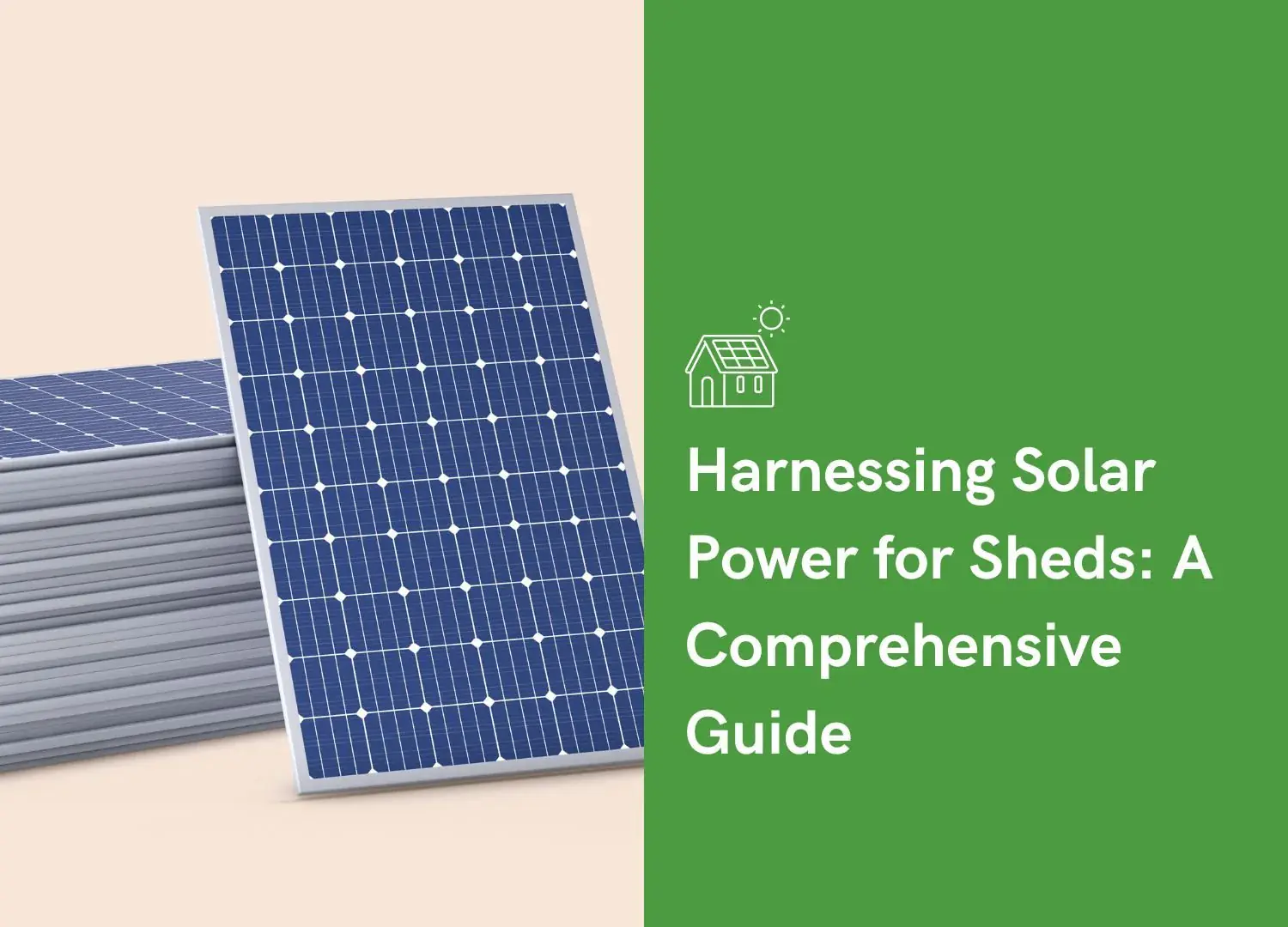
Running power to a shed used to mean digging a trench, laying armoured cable, and paying an electrician. Solar panels cut all of that out. A small system on your shed roof gives you lights, tools, and charging points without touching your house wiring or your monthly bill.
At 24.67p/kWh under the 2026 price cap, every unit you generate yourself saves real money. For a shed, the upfront cost is modest and the system is simple.
What a Shed Solar System Includes
A basic setup has five components:
Solar panels mounted on the shed roof or nearby on the ground. For most sheds, one to four panels is enough.
Charge controller sits between the panels and battery, regulating current flow and protecting the battery from overcharging.
Battery stores electricity for use after dark or on cloudy days. A 100Ah lithium battery covers lights and small tools easily.
Inverter converts the battery's DC power to 230V AC so you can run standard appliances and power tools. Skip it if you only need DC devices like LED lights.
Wiring and connectors link everything together. Shed solar kits include all of these, ready to install yourself.
Portable Kit or Professional Installation?
The answer depends on what you're powering.
A portable or DIY kit suits sheds used for basic tasks — lighting, a phone charger, a radio, small 12V tools. These kits cost £100 to £500, require no planning permission, and take an afternoon to set up. You can move them if needed.
A professionally installed system makes sense for heavier use — power tools, a workshop heater, an EV charger, or running a home office from your shed. A proper installation connects cleanly to your home's supply, can feed surplus electricity to the grid under the Smart Export Guarantee, and scales up if your needs grow.
How Much Do Shed Solar Panels Cost in 2026?
| System | Typical Cost | Best For |
| DIY kit (100–400W) | £150–£600 | Lights, phone charging, small tools |
| Small professional system (1–2kW) | £1,500–£2,500 | Workshop, security cameras, regular tool use |
| Full system (3–4kW) | £5,500–£6,500 | Home office, EV charging, heavy power use |
Solar panels carry 0% VAT in the UK, which reduces costs compared to most other home improvements.
Is Your Shed Roof Suitable?
Check four things before buying panels:
Structural strength. Panels weigh 10 to 15kg each. Most timber-framed shed roofs handle one or two panels without reinforcement. More than that, get a quick check from an installer.
Roof space. A standard 400W monocrystalline panel measures roughly 1.7m x 1m. Two panels need around 3.5m² of clear roof space.
Orientation. South-facing gets maximum sunlight. East or west-facing roofs generate around 15 to 20% less but still work well, particularly for sheds used mainly in the morning or evening.
Shading. Trees, fences, and neighbouring buildings all reduce output. Even partial shading on one panel affects the whole string. If shading is unavoidable, microinverters or optimisers can limit the impact.
If the roof isn't suitable, ground-mounted panels next to the shed or a solar carport are both practical alternatives.
How Many Panels Does a Shed Need?
Far fewer than a house. A single 400W panel generates around 320 to 360kWh per year in the UK — more than enough for LED lighting, phone charging, and occasional small tool use.
| Use | Recommended System |
| LED lights and phone charging | 1 x 100–200W panel + small battery |
| Power tools and basic workshop | 2 x 400W panels + 100Ah battery |
| Regular workshop with heaters | 4 x 400W panels + 200Ah battery |
| Home office or EV charging | 8–10 panels, professional installation |
Which Panel Type Is Best for a Shed?
Monocrystalline panels are the right choice for most sheds. Made from a single silicon crystal, they generate more power per square metre than polycrystalline panels — critical when roof space is limited. Efficiency runs from 20 to 25.5% on premium models. They cost slightly more but do more work in the same space.
Polycrystalline panels are cheaper upfront and suit larger roof areas where space isn't the constraint. Efficiency typically runs 15 to 17%. Largely being phased out in favour of monocrystalline in the UK residential market.
Flexible panels are an option for curved or lightweight shed roofs that can't support framed panels. Lower efficiency, but useful where standard mounting isn't possible.
Planning Permission
Most shed solar installations fall under permitted development rights and need no planning permission — the same rules that apply to house installations. Your system qualifies provided panels don't protrude more than 200mm from the roof surface and the installation doesn't exceed the highest point of the roof.
If your property is in a conservation area or is listed, check with your local planning authority before installing.
Connecting to the Grid
A DIY off-grid system needs no grid connection and no electrician. It simply charges a battery from the panels and runs your shed independently.
Connecting your shed system to your home's supply or to the grid requires a Part P-certified electrician and, for grid export, an MCS-certified installer. Grid connection lets you access Smart Export Guarantee payments for surplus electricity. In 2026, the best SEG rates pay up to 25p/kWh.
FAQs
Can I install shed solar panels myself? For a standalone off-grid kit, yes. Connecting to the house supply or grid requires a certified electrician.
Do shed panels work in winter? Output drops in winter due to shorter days and lower sun angles, but panels generate year-round. A battery sized for your winter usage keeps your shed powered through December and January.
Can I charge an EV from a shed solar system? Yes, with a large enough system. A 3 to 4kW system with battery storage can meaningfully contribute to EV charging, particularly overnight from a battery charged during the day.
Will shed solar panels add value to my property? A professional installation connected to the house supply can add value. A standalone shed kit is less likely to affect property value directly but reduces running costs.
Do I need a battery? Only if you use the shed outside daylight hours. If you only use it during the day, panels alone may be sufficient — the inverter converts solar power directly without storing it.
Get a Quote from CRG Direct
CRG Direct installs residential and shed solar systems across Hampshire, Guildford, and the South Coast. Full systems from £6,300 installed, including MCS certificate and HIES guarantee.