
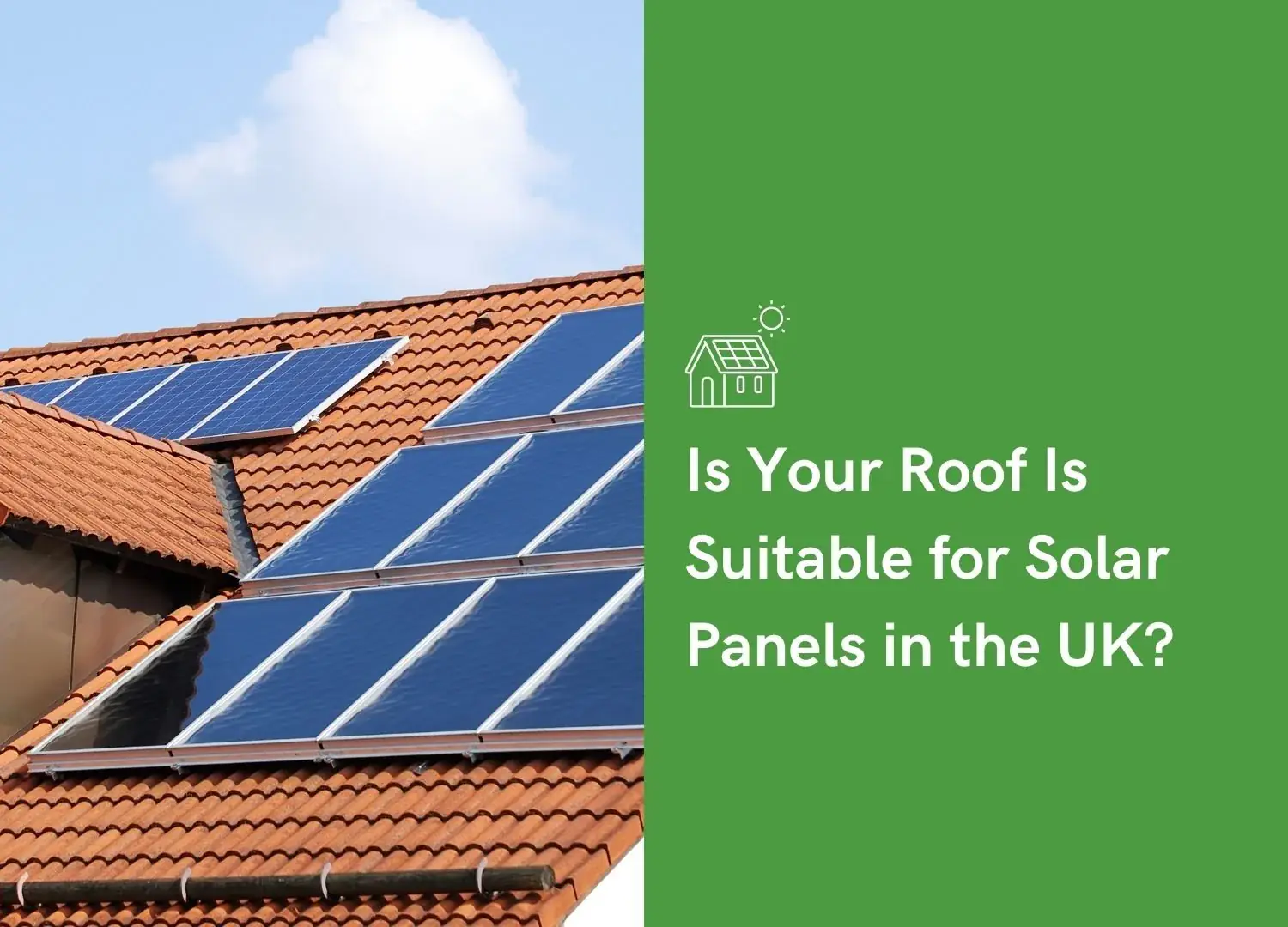
If your roof is structurally sound, gets decent daylight and has around 16-20m² of clear space, it will almost certainly take solar panels, whether you're a homeowner with a three-bed semi or a business with a warehouse roof.
CRG Direct designs and installs solar across the South and South East of England. This guide walks through what an installer actually checks, so you can work out where your own roof stands before anyone comes out to survey it.
Quick Answer: Most Roofs Are Suitable For Solar
Most roofs can host solar panels. The main reasons a roof fails an assessment are poor condition, heavy shading or not enough usable space, and all three can be identified before any money changes hands.
The genuine exceptions are narrow. Thatch is a fire risk with no safe mounting method, glass roofs have nothing to fix into, and asbestos cement sheeting can't be drilled or disturbed without creating a health and legal problem. Timber shake falls in the same bracket as thatch.
Everything else comes down to detail, and detail needs a professional roof survey. Photos and online maps give you a useful first impression, but only an on-site assessment tells you what your roof will actually take.
How To Tell If Your Roof Is Suitable For Solar
Most UK homes can have solar panels fitted, provided the roof is in good condition and the structure underneath is sound. Your roof's condition matters just as much as its orientation, particularly on older properties, so look for slipped tiles, sagging or obvious wear before you go any further. Standard UK roofing materials like tile and slate will usually support a solar panel system, subject to survey.
Start with the basics: roof angle, direction, and whether the surface gets direct sunlight for most of the day. In the UK, south-facing roofs often perform best, but west-facing roofs still work well, because the sun rises in the east and tracks across the sky through the day. The goal is capturing as much sunlight as possible, not chasing a perfect compass bearing. Check for shading from chimneys, nearby trees or other buildings too, since even partial shade affects a solar PV system.
Next, look at the available roof space. Chimneys, skylights, dormer windows and roof vents all eat into usable roof space, which changes how many panels will fit. Note rough measurements in metres if you can, and estimate how many square metres are blocked, leaving reasonable clearance around obstacles so panels can be installed safely and perform properly. This helps an installer judge panel numbers, what the final array might look like, and how much electricity it could generate.
Roof material comes next. Slate, tile and metal are all fine for solar installation. Thatched and glass roofs need far more care, and thatch in particular carries a fire risk that rules it out in most cases.
Before booking anything, gather a few clear photos of the roof from ground level and some basic dimensions. An installer can use those to check whether there's enough usable space for a full system and to spot layout limits early.
It also helps to dig out your recent electricity bills. Matching the design to your actual energy usage matters more than filling every square metre of roof. A good installer will combine your roof space, shading and likely output into a system size that suits the property.
For a quick first check, online tools and satellite maps will tell you whether your roof is likely to work. They won't replace a professional assessment, but they'll give you an early steer before you book a survey.
Key Factors Affecting Roof Suitability For Solar Panels
Six things decide it: orientation, shading, pitch, roof material, age and structural condition.
Different roof types change the best approach to installation, so it's worth confirming the structure is sound before panels go anywhere near it, especially on older homes. Online mapping tools and satellite views give a quick first impression and often reveal nearby trees or buildings that block direct sunlight at certain times of day.
If you're measuring, work out usable roof space rather than total area. Leave sensible clearance around vents and dormers. Chimneys reduce usable space, and dormer windows don't count toward the area available for panels at all.
Roof Orientation, South Facing Benefits And Maximum Sunlight
South-facing roofs produce the most electricity in the UK, capturing the sun as it tracks across the southern sky through the whole day.
East and west-facing roofs still generate well, typically somewhere around 75-85% of a south-facing system of the same size, depending on pitch and shading. A southeast or southwest roof sits closer to 95% of optimal. North-facing roofs are the real exception at roughly 55% of south-facing output, and most installers won't recommend them on their own.
Because the sun rises in the east and sets in the west, a split array across both slopes can generate more total electricity than a single south-facing array of the same size. It also spreads generation across more of the day, which suits households using power in the morning and evening rather than at midday.
When you're assessing orientation, map the sun path across the seasons rather than judging it on one sunny afternoon. Winter sun angles are much lower, so a chimney or tree that casts no shadow in July can shade panels heavily from October through to March.
Roof Pitch, Flat Roofs And Optimal Angles
A roof angle of around 30-40° is close to ideal in the UK, though panels still work well outside that range.
Pitched roofs are often well suited because they already have a useful tilt built in, and a slightly steeper pitch can improve winter performance. Roofs outside the ideal band aren't a problem, they're just not optimal, and the difference is usually smaller than most people expect.
Flat roofs need mounting frames or angle brackets to create the tilt. Installers also have to leave enough space between rows so one row doesn't shade the one behind it, which is why a flat roof needs more area per kW than a pitched one.
Flat Roof Solutions And Safety Considerations
Flat roofs are fully suitable with the right mounting system, and there are two main approaches.
Ballasted frames use concrete blocks to hold the frames down without penetrating the roof membrane. They're common on commercial flat roofs and larger residential jobs where you don't want to make a single hole in the waterproofing. The trade-off is weight, so structural load limits need checking before anything is ballasted, including the added kilos per square metre.
Fixed frames are mechanically anchored into the roof structure. They suit smaller residential systems and stand up better to wind in exposed coastal or hilltop locations.
East-west arrays at a shallow angle of 10-15° are an increasingly popular flat-roof option. Two rows facing opposite directions produce a broader generation curve across the day, with lower wind loading than steeper south-facing frames.
Two practical points that get missed: build in anti-ponding measures so water can't collect around the frames, and design clear access routes across the roof for cleaning and maintenance.
Roof Materials: Which Roofs Are Suitable For Solar Panels?
Solar panels can be installed on most UK roof types. The material affects how the mounting brackets attach, not whether installation is possible.
| Roof type | Suitability | Notes |
|---|---|---|
| Concrete or clay tile | Excellent | Standard hook-and-rail mounting, tiles lifted and replaced around brackets |
| Slate | Good | Needs specialist slate hooks, slightly higher labour cost |
| Metal (standing seam) | Excellent | Clamps attach without drilling, fastest installation |
| Asphalt shingle | Good | Flashed mounts maintain the weather seal |
| Flat (felt or EPDM) | Good | Ballasted or mechanically fixed frames required |
| Asbestos cement | Not suitable | Disturbing asbestos sheets is a health and legal risk |
| Thatch | Not suitable | Fire risk, no suitable mounting method |
| Glass | Not suitable | Nothing structural to fix into |
| Timber shake | Not suitable | Fire risk |
On weight generally, a standard domestic array works out at roughly 15-20kg per panel including mounting hardware, so a 10-panel system adds around 150-200kg. That's spread across multiple rafters rather than concentrated at one point, which is why the load needs assessing across the whole roof area and not just at the fixings.
Listed building consent or conservation area approval may restrict panel choice on older properties. Your installer confirms this before proceeding.
Roof Age, Condition And Ability To Hold Solar Panels
Look at your roof's remaining life before anything else. Solar panels last 25-30 years and often longer, so if the roof needs re-tiling within the next decade it's usually cheaper to do that first. Taking panels off and refitting them to replace tiles underneath costs more than the original installation work.
What a surveyor looks for:
- Slipped or loose tiles, leaks, rot, moss growth and any sagging areas
- Signs of previous water ingress in the loft, and the condition of the felt
- Rafter size, spacing and condition, to confirm the structure can carry the array for its full lifespan
- Whether the roof is sound enough to be left alone for 25 years or more
Most roofs in reasonable condition on a standard house are fine. Older properties showing rafter damage, roof spread or visible structural movement may need a proper structural assessment first, and your installer should flag that at survey stage rather than after you've signed.
Shading, Obstructions And Maximising Sunlight
Shading has a bigger impact on output than orientation. A shaded south-facing roof will underperform an unshaded east-facing one.
The problem with shading on a standard string inverter is that one shaded panel drags down every other panel in that circuit. A tree that shadows two panels at 2pm cuts the output of the whole system for those hours. Power optimisers or microinverters fix this by letting each panel work independently, which is worth the extra cost where shade is unavoidable. Panels with bypass diodes also cope better with partial shade.
To assess it properly:
- Check the roof at different times of day, not just once
- Identify the sources: nearby trees, chimneys, aerials, neighbouring buildings
- Think about future growth, since a young tree 10 metres away can become a problem within five years
- Consider trimming branches or shifting the panel layout to keep the array clear
Roof Size: How Many Solar Panels Can Your Roof Hold?
Measure the clear roof area rather than the full footprint. The space that counts is what's genuinely free of chimneys, vents, skylights and dormers.
A typical panel is roughly 1.7m by 1m, and once you allow clearance at the edges and around roof features for safety and maintenance access, the working rule is about 2m² per panel.
| System size | Panels needed | Roof space required | Suitable for |
|---|---|---|---|
| 3kW | ~8 panels | ~16m² | 1-2 bed homes, flats |
| 4kW | ~10 panels | ~20m² | 3-4 bed semis |
| 6kW | ~14-15 panels | ~30m² | 4+ bed detached |
Also worth checking: a garage, extension or outbuilding may have perfectly good roof space for part of the array if the main roof can't take it all. There's more detail in our guide to how many solar panels you need.
Roof Survey And Roof Suitability Assessment
The only way to know for certain is an on-site roof survey, because photos and rough measurements rarely show the full picture.
A survey lets an installer assess usable roof space, the roof's condition, pitch, orientation and shading together, and work out realistic panel numbers. A standard domestic installation typically needs around 16-20m² of clear area. Chimneys and other obstructions cut into that, which changes both the layout and how much electricity the roof can generate.
What A Professional Roof Survey Should Check
- Structure. Load capacity, rafter positions and spacing, confirming the roof can safely carry the array
- Age and weatherproofing. Roof age, condition of the felt, any signs of water ingress, plus features like dormer windows and roof vents
- Performance factors. Orientation, pitch and shading, measured rather than estimated, to determine how many panels fit the usable area
- Electrics. Consumer unit condition, cable routes and where the inverter will sit
Structural Load Check And Evidence Collection
Good evidence makes for a better design, so ask for it:
- Photos of the rafters and loft access, showing timber sizes and spacing
- Drone imagery where the roof can't be safely accessed
- A written roof suitability report from the installer, not just a verbal thumbs up
That paperwork is also useful later if you sell the property or need to make a warranty claim.
Solar Panel Installation: Process, Timeline And Permissions
From first quote to commissioning, a typical domestic installation runs over a few weeks, with the panels themselves usually going on in one to two days.
Most residential solar is permitted development, so no planning permission is needed. Listed buildings are the main exception, and conservation areas have siting limits, typically around panels on roof slopes fronting a highway. Our planning permission guide covers the detail, and your installer confirms your position at survey stage.
Always use an MCS-certified installer. It's the requirement for export tariff eligibility and for most warranty and grant routes, and CRG Direct's teams are MCS certified and HIES accredited.
Typical Solar Panel Installation Steps
- Design and estimate. A bespoke system design and performance estimate for the full PV system before you commit to anything
- Survey. The on-site roof survey is scheduled and carried out, and the design is adjusted to what the roof actually allows
- Installation. Any structural work, then scaffolding, mounting rails, panels and the electrical connections
- Grid connection and handover. Notification to the DNO, commissioning, and your paperwork pack including the MCS certificate, which you'll need to apply for an export tariff
Financials, Grants And Battery Options
Solar costs less than most people assume, partly because of the VAT position. Domestic solar PV and battery storage installed by an installer is zero-rated for VAT until 31 March 2027, after which the rate is currently set to return to 5% under the Energy Saving Materials scheme (HMRC guidance, via Solar Energy UK).
On funding, the Warm Homes: Local Grant can fully fund energy efficiency and low-carbon heating measures for eligible lower-income households in England with an EPC of D-G. CRG Direct also works on HECA-funded retrofit schemes with local authorities, so it's worth asking what's live in your area before you self-fund. Check your eligibility here.
Adding battery storage is worth considering at design stage rather than later. A battery stores generation you'd otherwise export and releases it in the evening, which lifts how much of your own electricity you actually use. Whether that stacks up depends on your usage pattern, your tariff and your roof's likely output.
Ask any installer for a written estimate of annual generation in kWh and the expected effect on your electricity bills, based on your own consumption rather than a national average. Actual savings vary with your usage, your generation and future energy costs, so treat any figure that isn't tied to your property with caution. Our guide to how long solar panels take to pay for themselves explains how those numbers are put together.
Maintenance, Warranties And Long-Term Care
Solar is low-maintenance, not no-maintenance.
- Visual checks. A look at the array a couple of times a year for lifted panels, bird nesting under the frames or debris build-up
- Cleaning. UK rainfall handles most of it, though panels under trees or on shallow pitches benefit from an occasional professional clean
- Monitoring. Check the app or inverter display monthly, since a drop in output is usually the first sign something needs attention
- Paperwork. Keep the MCS certificate, warranties, DNO notification and the installation report together in one place
- Annual review. Book a performance review with your installer to compare actual output against the original estimate
There's more on running costs in our guide to solar panel maintenance costs.
Next Steps: Book A Roof Survey With CRG Direct
If you want a straight answer about your own roof rather than a general one, book a no-obligation roof survey.
Before you do, take a few photos of the roof from ground level on each side of the property, note anything that shades it during the day, and dig out a recent electricity bill so the design can be matched to your usage. If you can get into the loft safely, a photo of the rafters helps as well.
Contact us for a free roof assessment and quote and we'll respond within one working day. You can also check your eligibility for grants and funding first.
FAQ And Common Concerns
Are flat roofs suitable for solar panels? Yes. Panels sit in angled frames set at roughly 10-35°, either ballasted with concrete blocks or mechanically fixed. The main considerations are the extra weight of a ballasted system and leaving enough gap between rows to avoid self-shading.
Does my roof's age affect how long the panels last? Not directly, but it affects whether the panels stay put. Panels are designed for 25-30 years or more, so if the roof underneath needs replacing in year eight, you're paying to remove and refit the array.
When should I re-roof before installing panels? If your roof has fewer than 10-15 years of life left, or shows rot, sagging or repeated leaks, re-roof first. Doing both at once is far cheaper than doing them five years apart.
What if my roof has skylights or roof vents? They reduce usable panel area but don't prevent installation. The layout works around them, which may mean a slightly smaller system than your total roof area suggests.
My roof faces east, is it worth it? Usually yes. At roughly 75-85% of south-facing output, an east-facing roof still produces a worthwhile amount, and it generates more in the morning, which suits households using electricity early in the day.
Do I need to reinforce my roof for solar panels? For most UK homes built in the last 50 years, no. The weight sits well within normal roof load tolerances. Properties with damaged rafters or visible structural movement may need an assessment first.
Will solar panels invalidate my roof warranty? It depends on the roofing material warranty and the installation method. MCS-certified installers use mounting systems designed to maintain weatherproofing, and on tiled roofs the hooks replace the underlay seal at each penetration point. Raise it with your installer if you have an active roof warranty.
CRG Direct has been installing solar across the South and South East of England since 2017. MCS Certified, HIES Accredited.